Polio Efforts Recognised
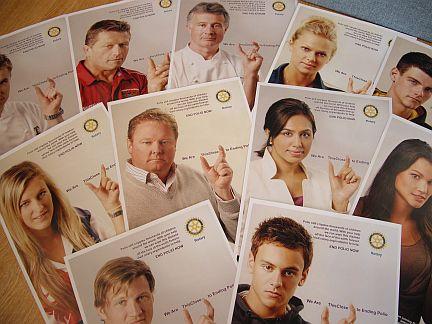
The local variation to the ThisClose to Ending Polio Campaign that club member Darren Hands organised for the disitrict has been recognised by winning a national award.
POLIO FIGHT RECOGNISED
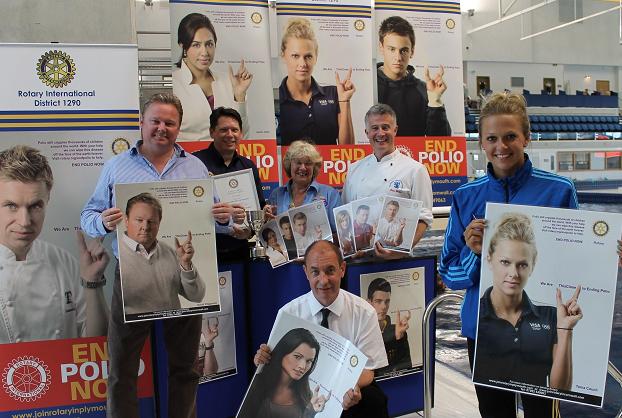
Pictured L-R: David Fitzgerald, Darren Hands (holding the PR Trophy) , Rotary District 1290 Governor Maxine Stoyel, John Allen, Peter Gorton and Tonia Couch
Rotarians efforts in West Devon & Cornwall towards the fight to end Polio have recently been rewarded. At the recent Rotary GB&I (Rotary in Great Britain & Ireland) Conference, Darren Hands from the Rotary Club of Plympton
was recognised for his work on the local variataion of the Rotary "ThisClose to Ending Polio" campaign posters at this year's national conference.
This year, there were two exceptional PR campaigns which the judges felt were both worthy of recognition so in a first, the Rotary GB&I PR Trophy was a joint award. The award was shared with the Rotary Club of Grantham's Paul Wilson and the Rotary Swimarathon he organised - also in aid of Rotary's Polio efforts.
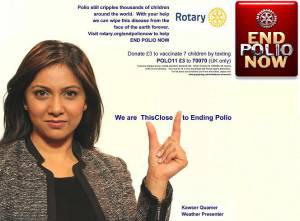
Darren created a localised This Close campaign in our district by contacting local celebrities and asked if they would donate their support and time to help create posters and also be active participants in the campaign. Aysha Iqbal from the BBC signed up along with Olympic hopefuls Tom Daley and Tonia Couch, BBC Radio Devon presenter David Fitzgerald as well as a host of other well known faces. With the help of photographer John Allen, 11 different images were created of local personalities.
Having recently discovered his mother suffered from Polio as a child, Darren is passionate about the Polio campaign and the need to End Polio Now.
This award comes at an important time in the fight to end Polio, as Darren explained, India has just had its first Polio free year but the remaining three endemic countries are the toughest ones to crack.
Secretary General of the United Nations, Ban Ki-moon last week made the following statement to throw further weight behind the fight:
Related pages...
.jpeg)
End Polio Campaign - Crocus Planting
more Like many Rotary clubs around the UK, our club have marked World Polio Day.
Suppers Ready - International Supper for End Polio
more In a change to our infamous International lunches, we are introducing an International Supper on World Polio Day

Make History Today
more The Bill & Melinda Gates Foundation have announced they will match 2 for 1 every dollar Rotary commits up to $35 million towards polio eradication through to 2018. Take action and help end polio. Make History Today - End Polio Now
Congratulations
more The Rotary Club of Plympton would like to pass on congratulations to former club member and End Polio supporter Antony Jinman on reaching the South Pole and fellow End Polio supporters Jon Rudd and Ruta Meilutyte on their success at the Herald's SPOTY
World Polio Day
more World Polio Day is the 24th October. Please help the Rotary Club of Plympton (and Rotarians around the world) see an end to Polio.

The World's Biggest Commercial
more As part of the club's efforts to celebrate Rotary's birthday on the 23rd February, club members have uploaded their images to the Rotary International "World's Biggest Commercial" to help raise awareness of the fight to end Polio.

World Polio Day - 24th October 2012
more With World Polio Day occurring on the 24th October, Rotarians efforts to see an end to Polio in the world have been enhanced by the support of several local Olympians who are helping to raise awareness of the eradication efforts.
Thanks for Life / End Polio Now
Konnie Huq promotion of Campaign
Bil Gates Message - Spring 2010
The Travels of Kenny Ketchup
Local Personalities throw their weight behind Rotary campaign
back to page above this...

End Polio Now
back Details on our clubs efforts towards Rotary's End Polio campaign can be found on these pages.