13th November Quiz Night at the Medway Centre - Fri 13th Nov at 7.00 pm
 7:00 for 7:30 Quiz by John Kelcey

.jpg)
About us
Meeting Update
The club made a £350 donation (£100 raised personally by member Mary) to local Charity
Aquabox in aid of the units they have been shipping out to Nepal following the recent
events. They have also been sending to Venezuela following the recent earthquakes there.
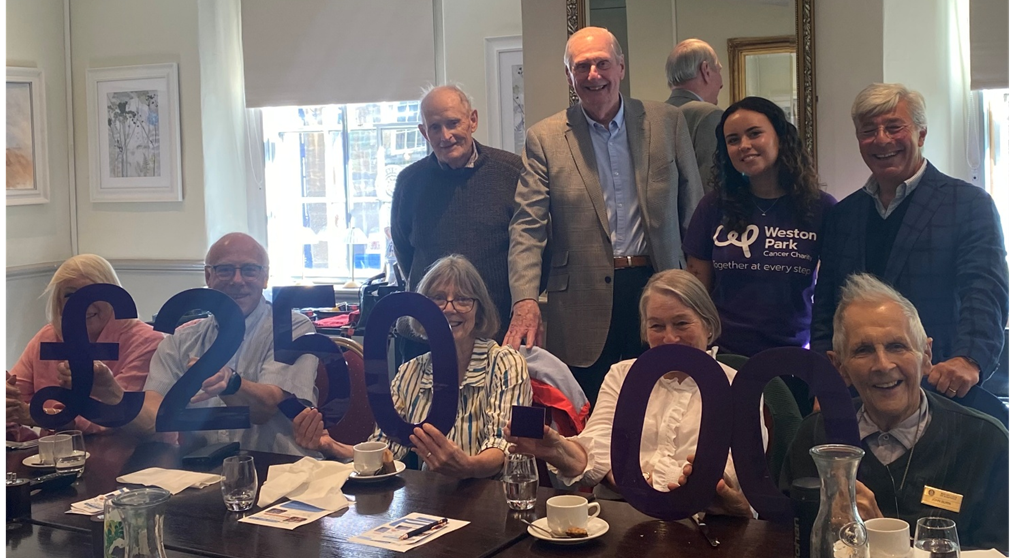
Eva Barton from Weston Park Cancer Charity joined us again at our lunchtime meeting 16 th
September to formally receive our £250 donation and update on the work of the charity.
The MRI scanner is well on the way to the full £1.85M funding – and one current funding
appeal closes with an event on 2 nd October – but another (family event) is already
scheduled for the following day!
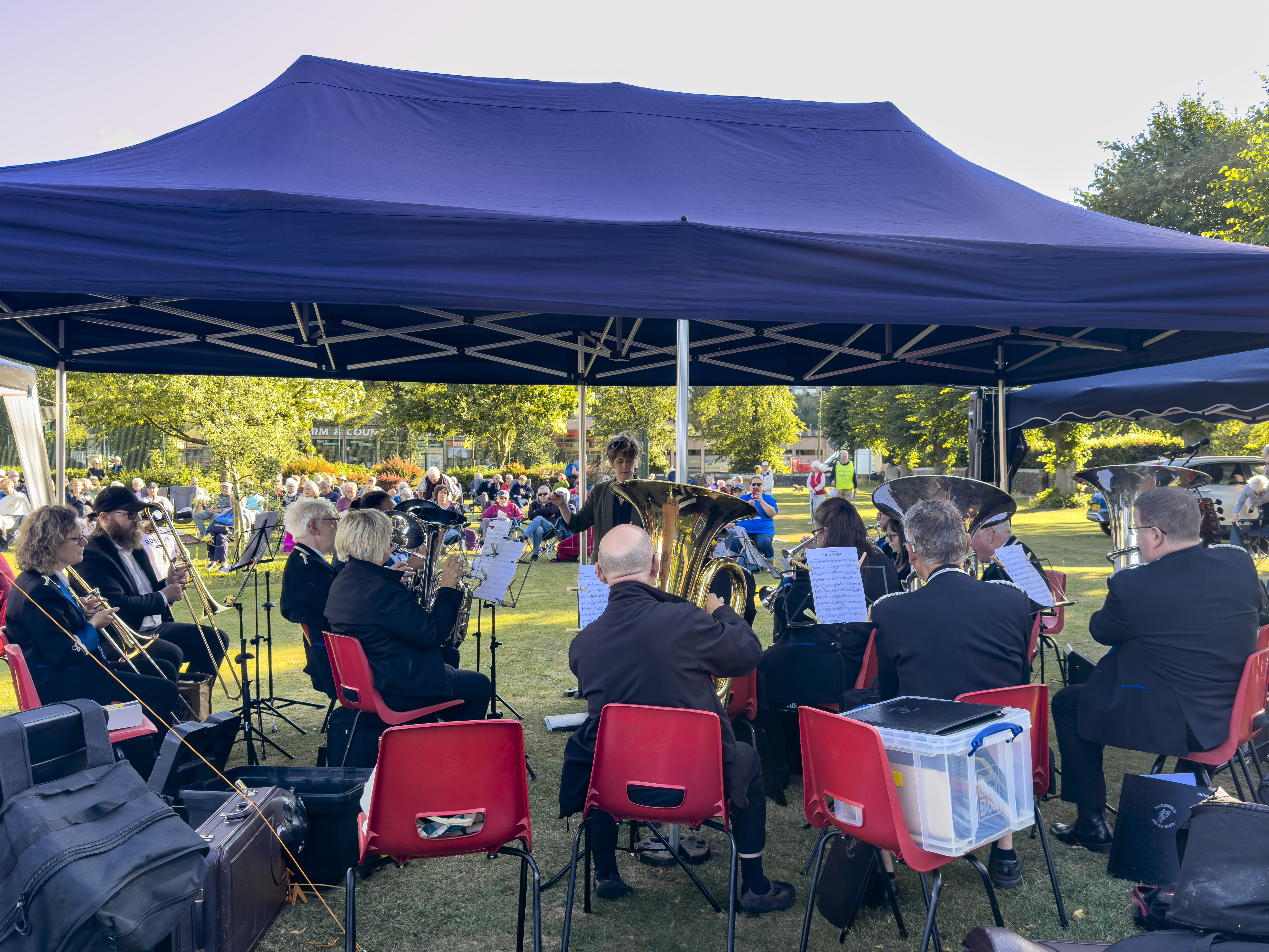
Rotary Bakewell Brass in the Park hits the High Spots again!
Once again, the park was alive to music on Wednesday 4th July as Rotary Bakewell’s contribution to the town’s Carnival week celebration – the weather was warm and dry, and everyone settled into a great evening. We inevitably had some later arrivals as we had clashed with England’s World Cup match against the Congo!
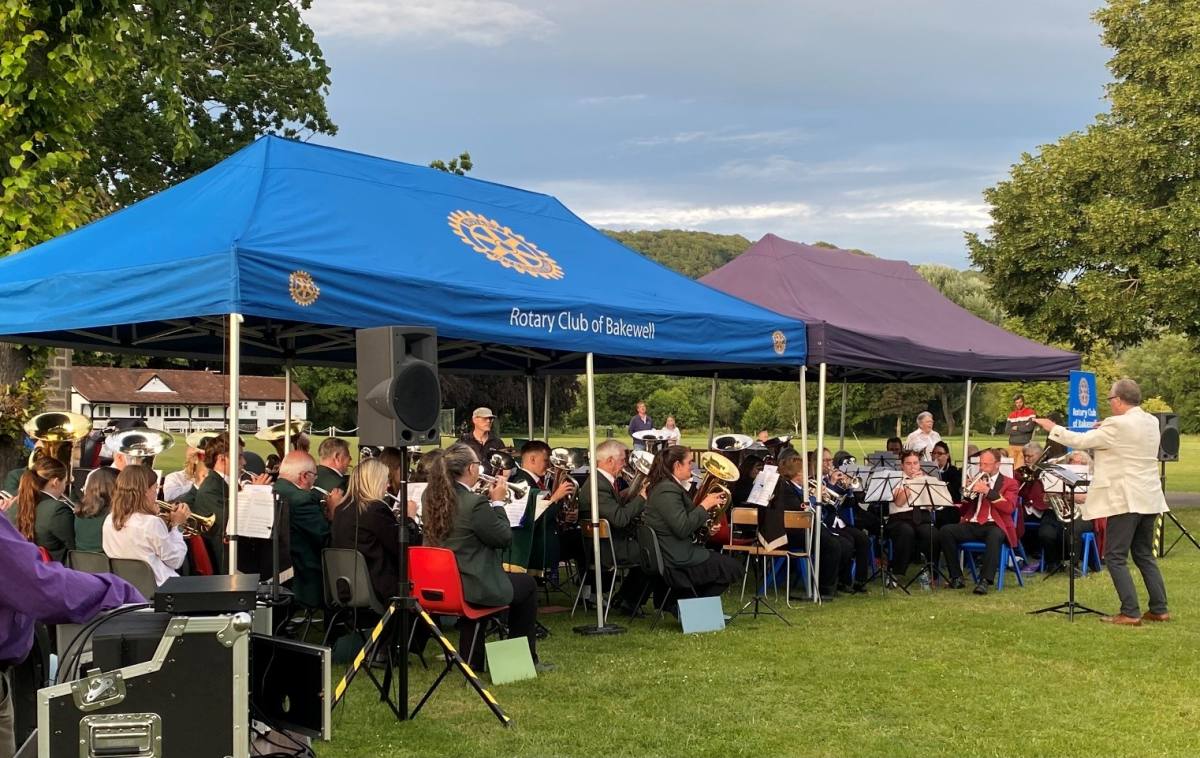
Club President Tom Marshall opened proceedings with Sue Stones’ very talented Bakewell Youth Theatre first on parade – who performed music from their successful recent shows Grease and Les Miserable accompanied by musical director Chris Blakshaw.
Bakewell Silver Band ably conducted by Lizzy Keeble gave us a varied selection ranging from Sally Gardens to Tiger Rag – followed by Cressbrook Band under the baton of Helen Thurlby who gave us a more all-time favourites including Breakfast in America and Nat King Cole’s Unforgettable. Helen rallied everyone into a rousing Happy Birthday to one of Bakewell Rotary’s Repair Café regulars Harry Gregory who was there celebrating with his family!
Last up with their set was Youlgrave with conductor Richard Orwin which included Perfect Day and Baggy Trousers. The evening concluded with massed band finale when all three bands combined for a rousing selection including Locomotion and the ever-popular Abba showstopper Mamma Mia – which can be enjoyed on this link!!
Generous donations during the evening were for the Community Grants scheme which has seen local schools, organisations and community projects benefit with a batch of individual awards of up to £400 twice a year for the last three years.
Grateful thanks to local sponsors Jepson Funerals, Longbow Venues, Franklin & Co, Medway Centre and Heirs & Graces – and to the tremendous support, encouragement and assistance from the Carnival committee and Chair Paul Morgans
Bakewell Rotary Repair Café – another success!
The club scored another successful day at their Repair café at the Methodist Church Hall, Bakewell on Saturday 28th March despite the lure of fine weather outside – it was a good day but a slow start - 23 items brought for bringing back to life, 12 electrical, 7 sewing and 6 general – 18 were successfully repaired. These included a brake overhaul on a mobility wheeler, a patio jet cleaner and a keyboard!! We had some helpful snips from a minister at Hathersage where they have joint cafe with the Anglican’s – great praise from the Great Longstone jet cleaner and promise of a pic in the next Under the Edge magazine! There was a visit from our supporters at Bakewell Climate Action and some useful tips for happy clients to pose with “Rotary fixed it for me” placards!
The next café is scheduled for Saturday 30th May.

Bakewell Rotary Support the Farming Life Centre with a Club Community Grant
Rachel Metcalfe, an Edale farmer’s wife and Charity Manager for the Farming Life Centre joined our lunch meeting at the Rutland Arms Hotel, Bakewell on 18th February to receive the £400 community grant and tell us more about their work. They are a rural support charity aimed at improving health and well-being for farmers and to create opportunities for social interaction to connect members of the farming community and is now based out of the Bakewell Agricultural Business Centre. The money is to establish a “Farming Life Games Hub” to reduce isolation and improve mental wellbeing – and to purchase games
and provide a deposit for the Hall rental in Ashford-in-the-Water.
January 2026
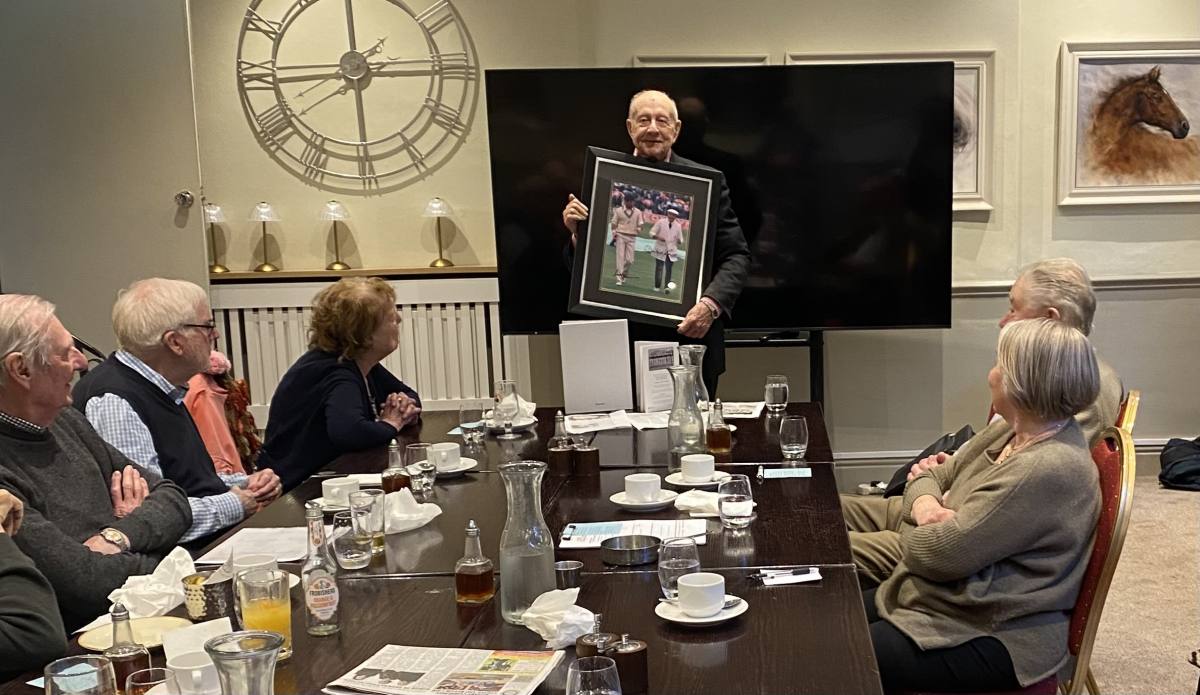
We had two excellent presentations at January meetings from within our own member ranks. At the lunchtime meeting on 21st, Roy Pickles gave us a fascinating talk about his friend the well-known cricket umpire Dickie Bird. Some years ago he met up with him regularly at Barnsley FC along with fellow footballing friends including Michael Parkinson and Geoffrey Boycott. Dickie did play with Yorkshire CC but made his name as an umpire – including the much-remembered June 1975 game in Buxton when snow halted play!! Roy arranged Dickie for the Buxton cricket club as guest speaker at a 50th anniversary event in Buxton last year – and even arranged a chauffeur to pick him up and return him home to Barnsley afterwards – and accompanied them. Sadly, Dickie passed later last year, and Roy did attend his funeral. He brought along various mementoes including a scrapbook he had compiled for the anniversary event last year – and Acting President Ann brought along a signed pic of Dickie from her own collection from the days of Rotary railway-children outings to cricket at Lords and elsewhere!
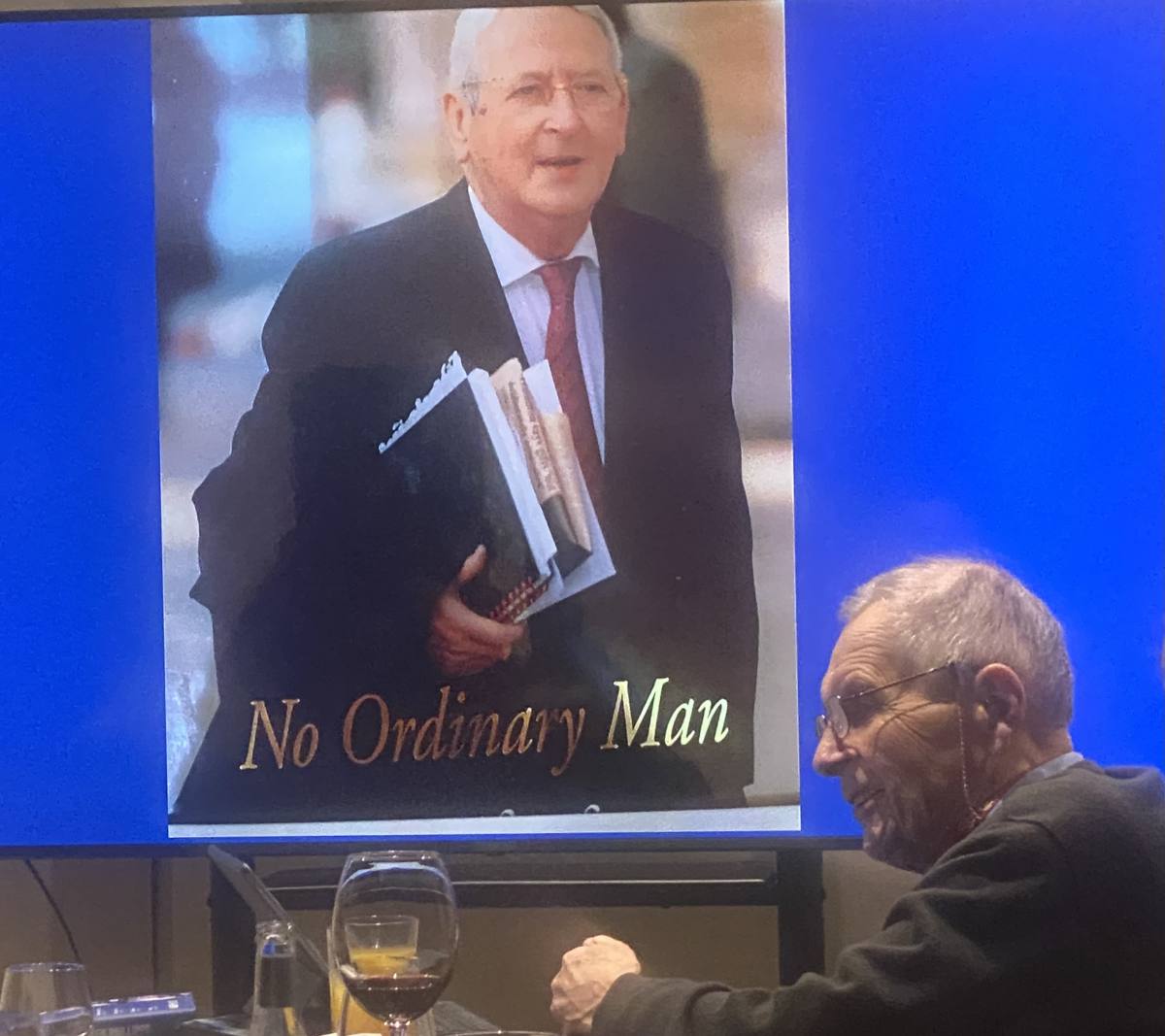
At our evening meeting on the 28thJanuary. Our resident Poirot sleuth Dr John Burn gave another illuminating presentation featuring the arrest and trial for murder of a baby with Downs syndrome in 1981 by a Derby paediatrician 54-year-old Dr Leonard Arthur. A case of medical legal jiggery-pokery! Dr Arthur was a compassionate and well-respected practitioner, married with six children. A complicated case and essentially one of balance of murder against allowing to die. A fascinating moral dilemma and Dr Arthur was defended by George Carman QC – later renowned for defending Jeremy Thorpe. Whilst the judge ruled that murder had occurred Dr Arthur was acquitted by the jury. Sadly, whilst returning to work he never fully recovered and died on Christmas Day two years later.
End of year update:
The club collected £1,260 at the Aldi store in Bakewell over three days before Christmas for our highly commended local community grants scheme and for Ashgate Hospice Save a precious Bed fighting fund where reduced central funding has currently limited the number of available care beds from 15 to 6. The club is again very appreciative of the support and encouragement from the store manager and his staff. Santa was there to greet the youngsters as well!

November 26th - Many thanks to our speaker David Ensor who had travelled from the Cotswolds to be with us - and tell us more of his fundraising for Alzheimer’s Research UK with several walks and over £70k raised so far - and off to do the via Francigena - Lucca to Rome next year.

We were delighted to welcome Prof Roger Clough to our evening meeting on 29th October at The Rutland Arms, Bakewell for a very stimulating presentation and discussion based on his book Oldenland – how to grow old gracefully, understand others and enjoy your later years! Roger is a retired academic from Lancaster University who has written numerous books on ageing and social care – and widely spoken publicly – and this year on radio 4 and at the annual Buxton Festival at the Opera House.
 L to R - Prof Roger Clough with Rotary members Margie Stuckey and Dr John Burn
24th October - World Polio Day
Bakewell Rotary have purchased and received 4,000 crocus bulbs which are being donated to local schools and community projects ahead of Rotary initiatives worldwide to eradicate polio – with substantial financial support for many years from the Bill Gates Foundation. Recipients include All Saints Church Curbar, Baslow Garden Society, Calver village, Darley Dale community, and Great Longstone primary school.
Looking ahead……………..
We have various activities in the pipeline including Aquabox HQ visit in Cromford, support for Remembrance Day, Bakewell church annual tree festival, Christmas; Santa events at ALDI, annual senior’s Xmas lunch; panto visit – and hopefully another Quiz Night!!
If you would like to find out more about Rotary and its work in Bakewell; surrounding areas - contact Membership chair Ann Esders aesders@aol.com or (M) 07967 665580.
Repair Café Scores Another Resounding Success

Another very convivial and lively morning with nearly 20 items brought in for repairs - We had a bike in for Keith to service and brought a very ancient sewing machine back into service and declared electrically safe! We had the usual array of electrical repairs – some repairable including a lawnmower, steam cleaner and hedge trimmer – but others suffering planned obsolescence! Several clocks were fixed but not a radio which only plays R3!!
There were many kind words from those attending - several commented brilliant service, very happy with repairs - and several on the availability and extent of expertise - one had come all the way from Matlock and said nothing like this available there!
The next café - Methodist Church Hall, Bakewell, Saturday 29th November,10-12.30
More details or to offer support contact Margie on 01629 813638 or 07947 645331
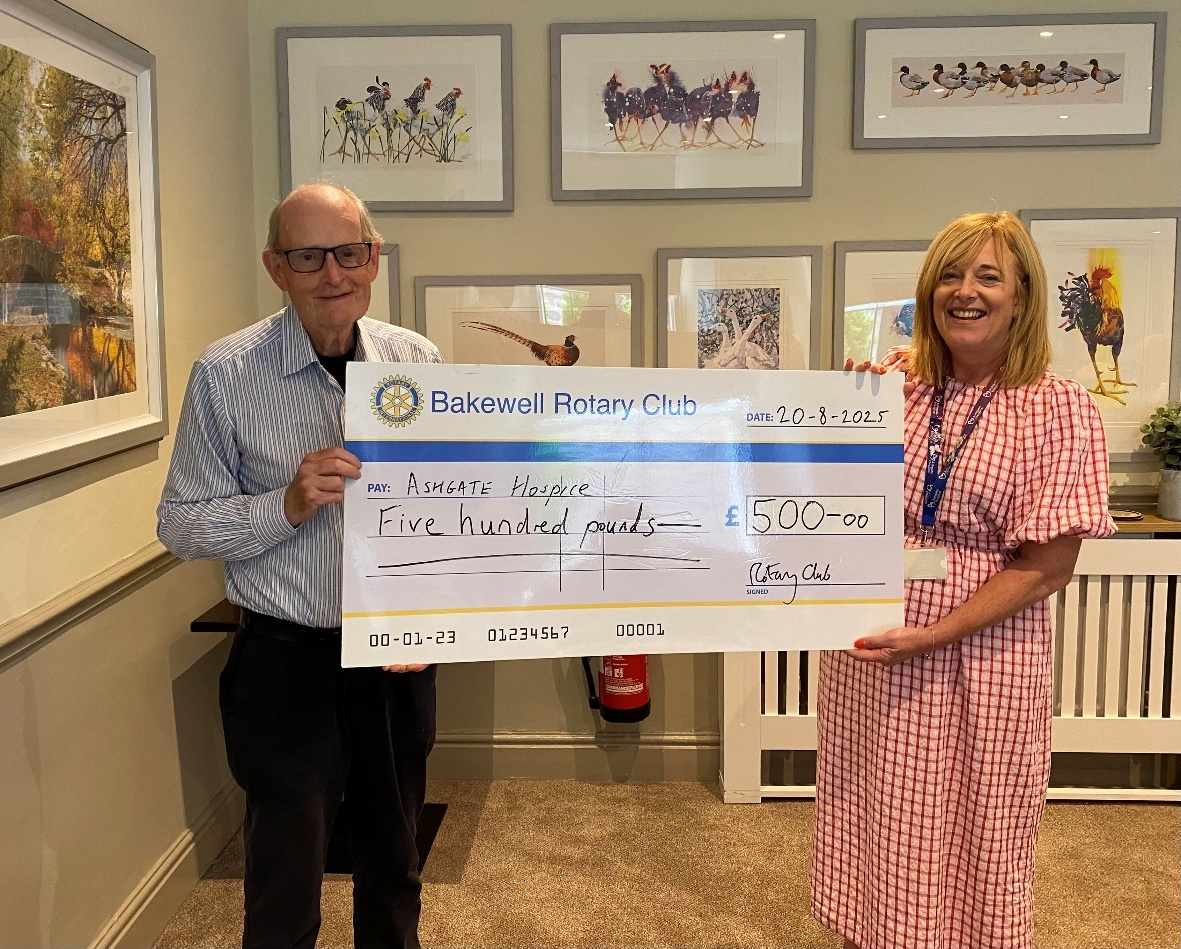
President’s Charity presentation to Ashgate Hospice
John Craike made a presentation of £500 to Adele Taylor from Ashgate Hospice as the charity had been chosen for his presidential year 2024/25. Adele joined our meeting at The Rutland Arms, Bakewell on 20th August to update us on the charity – which is ever more reliant on fund-raising as public funding has decreased. Only 15 of the 21 available beds are currently in use. Adele’s late husband and father both spent their last days at the hospice – and she, along with her mother and children are part of the sponsored Ashgate skydive on Saturday 6th September. https://www.justgiving.com/
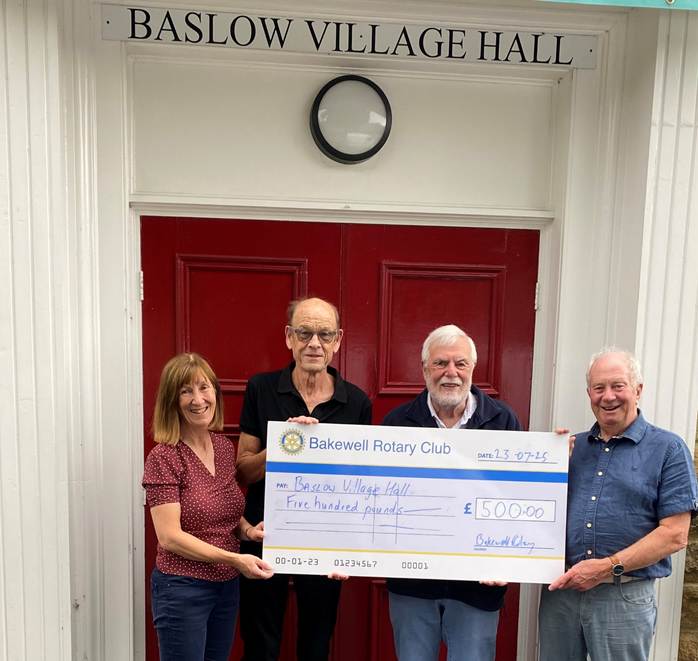
Baslow Village Hall Floor refurbishment
The Village Hall in Baslow was another recipient of the latest round of Rotary Bakewell’s community grant scheme– with a £500 contribution made towards the repairs to the hall floor damage following the floods last year – now fully back to mint condition. The cheque presentation was at the Hall on Thursday 24th July.
Rotary Bakewell "Brass in the Park"
The annual excursion to Carsington Sailing Club was on 11 th June for the Fun Day Sailability with some 15 pupils from Lady Manners’ School in Bakewell in our club boats.
Rotary Bakewell supports Sheffield Children’s Hospital Cancer patients!
Stephanie McCawley from the Give A Duck Foundation charity attended our bi-monthly Repair Café at Bakewell Methodist Church Hall on Saturday 31st May. The club presented Stephanie with a £250 cheque which will enable them to supply Sheffield Children's Hospital with 10 Chemo Ducks for the next children who have been diagnosed and requiring treatment for their cancer.
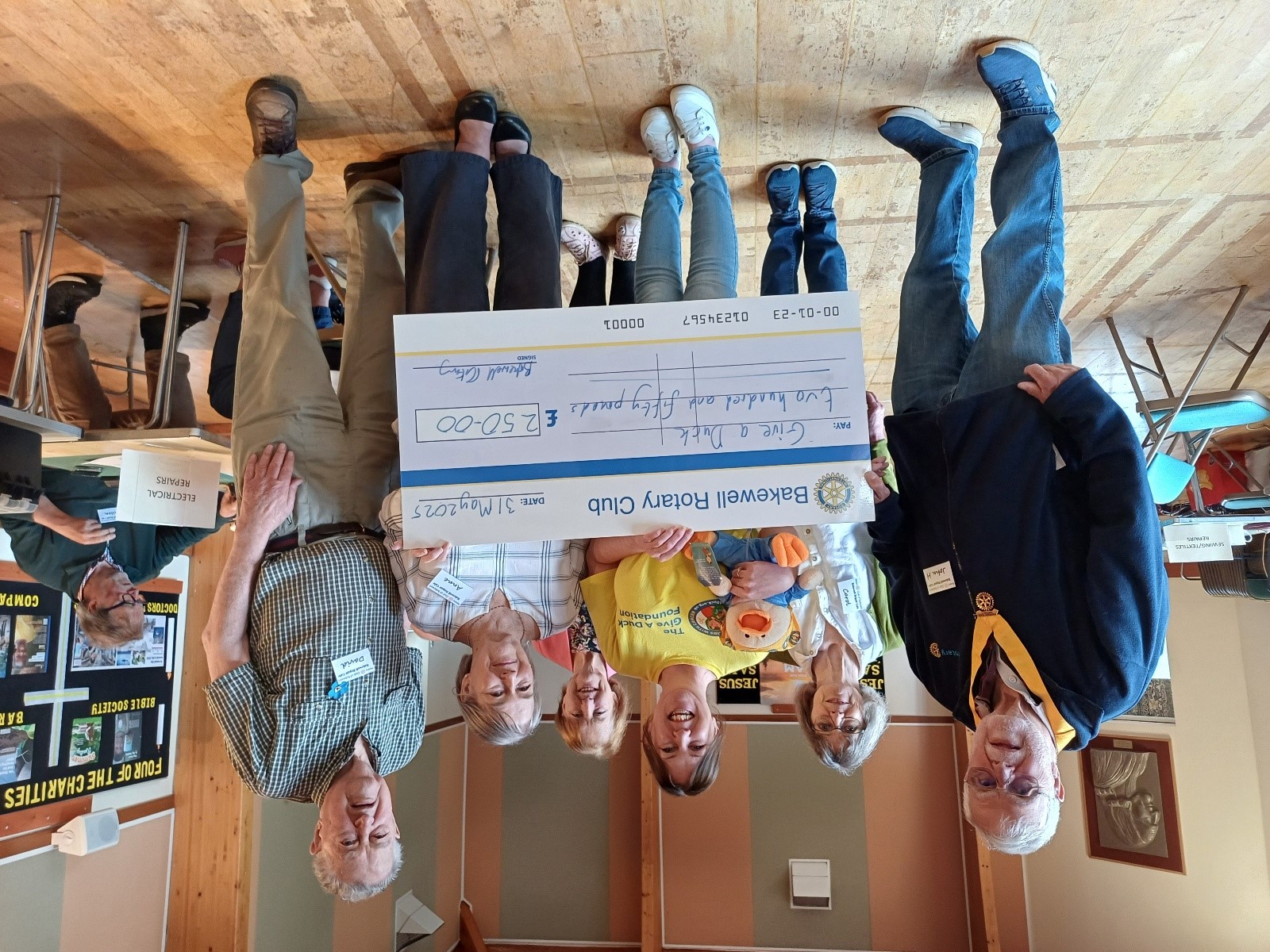
Huge thanks to the Rotary and community volunteers that were at the Repair café – and we managed to work on 17 repairs, the bulk of which were happily resolved. Repairs included a box lid, a broken drawer handle, knives were sharpened, and one lamp and clock were fixed. Two bicycles were repaired, and the sewing group was busy with an overlocker and sewing machine as well as a few other repairs.
Happening soon...
Fri, Nov 13th 2026 7:00 pm
13th November Quiz Night at the Medway Centre
7:00 for 7:30 Quiz by John Kelcey
detailsMeetings & Venue
Where and when:
We meet on Wednesdays at 12:30
(We meet every 1st and 3rd Wednesday at the Rutland Arms Bakewell - and normally a social meeting on the last Wednesday of the month at 6pm. If you wish to attend please contact: Naeem Anjum naeem.work22@gmail.com (M) 07535 146173 by Midday Sunday ) <Rutland Arms - King's Suite
The Square
Bakewell
DE45 1BT
01629 812812
W3W: ///cracking.pocket.purified
Rotary News
Be part of a global network of volunteers, trying to make the world a better place. Please also see the 'links & news' page for information from the local district and live feeds from Rotary International and Rotary International in GB&I.